🏔️ Gamo Highlands
The Gamo zone is known for its rich enset traditions, particularly among the Dorze people, who are famous for their beehive-shaped houses and intricate enset processing techniques [citation:3][citation:4].
🌱 Agronomy Practices

Enset Terraces in Gamo Highlands
Traditional terracing techniques on steep slopes allow enset cultivation at elevations up to 3000m. Farmers use intensive manure management to maintain soil fertility [citation:2].
Source: Birmeta et al., ResearchGate

Enset Macropropagation
Farmers in Gamo using macropropagation techniques to multiply disease-free planting material. This method was recently promoted through university extension programs [citation:2].
Source: Arba Minch University IUC Program [citation:2]
⚙️ Processing Activities
Traditional Enset Processing - Gamo Highlands
A Dorze woman using a wooden roller to tenderize enset stalks. This labor-intensive process breaks down fibers to extract the starchy pulp for fermentation [citation:3].
🍽️ Traditional Foods

Dorze Woman Making Enset Bread
A Dorze woman baking traditional bread from fermented enset pulp. The flatbread has a slightly sweet, banana-like flavor and is the staple food in the Gamo Highlands [citation:4].
🌄 Wolaita
Wolaita is considered the heartland of enset cultivation, where the crop is central to household food security and cultural identity. The region is known for complex intercropping systems [citation:5].
🌱 Agronomy Practices
Enset Intercropping System - Wolaita
Enset landraces intercropped with coffee (right), maize (front), and perennial trees. This diverse system provides multiple harvests and maintains soil health [citation:5].

Enset Landrace Diversity - Wolaita
Multiple enset landraces in a single farm, showing variation in leaf color (green to purple) and plant stature. Wolaita farmers maintain 50+ distinct landraces [citation:7].
🍽️ Traditional Foods

Traditional Enset Foods - Kocho, Bulla, Amicho
(a) Kocho - fermented dough from decorticated pseudostem and corm; (b) Bulla - dried starch powder; (c) Amicho - boiled corm pieces. These are the primary enset-based foods [citation:1][citation:7].
Source: Yemataw et al., ResearchGate
⛰️ Gurage
The Gurage zone features dense enset stands with minimal intercropping due to drier conditions. This region is known for medicinal uses of enset, particularly for bone healing [citation:6].
💚 Medicinal Applications

Gurage Women Processing Enset for Medicinal Use
Preparing specific landraces (Astara, Kibinar, Dere, Guarye) for traditional bone healing. The corm is processed and mixed with yogurt or milk to treat fractures [citation:7].
Source: Wondimu et al., ResearchGate
🌱 Agronomy Practices

Dense Enset Stand - Gurage Zone
Unlike other regions, Gurage farms often grow enset in dense monoculture stands with few shade trees, adapting to drier conditions [citation:6].
Source: Yemataw et al.
🌋 Sidama
Sidama features high-elevation enset cultivation often integrated with coffee under shade trees. The region is known for high landrace diversity and research sites for enset genetics [citation:6][citation:10].
🌿 Landraces & Genetic Diversity
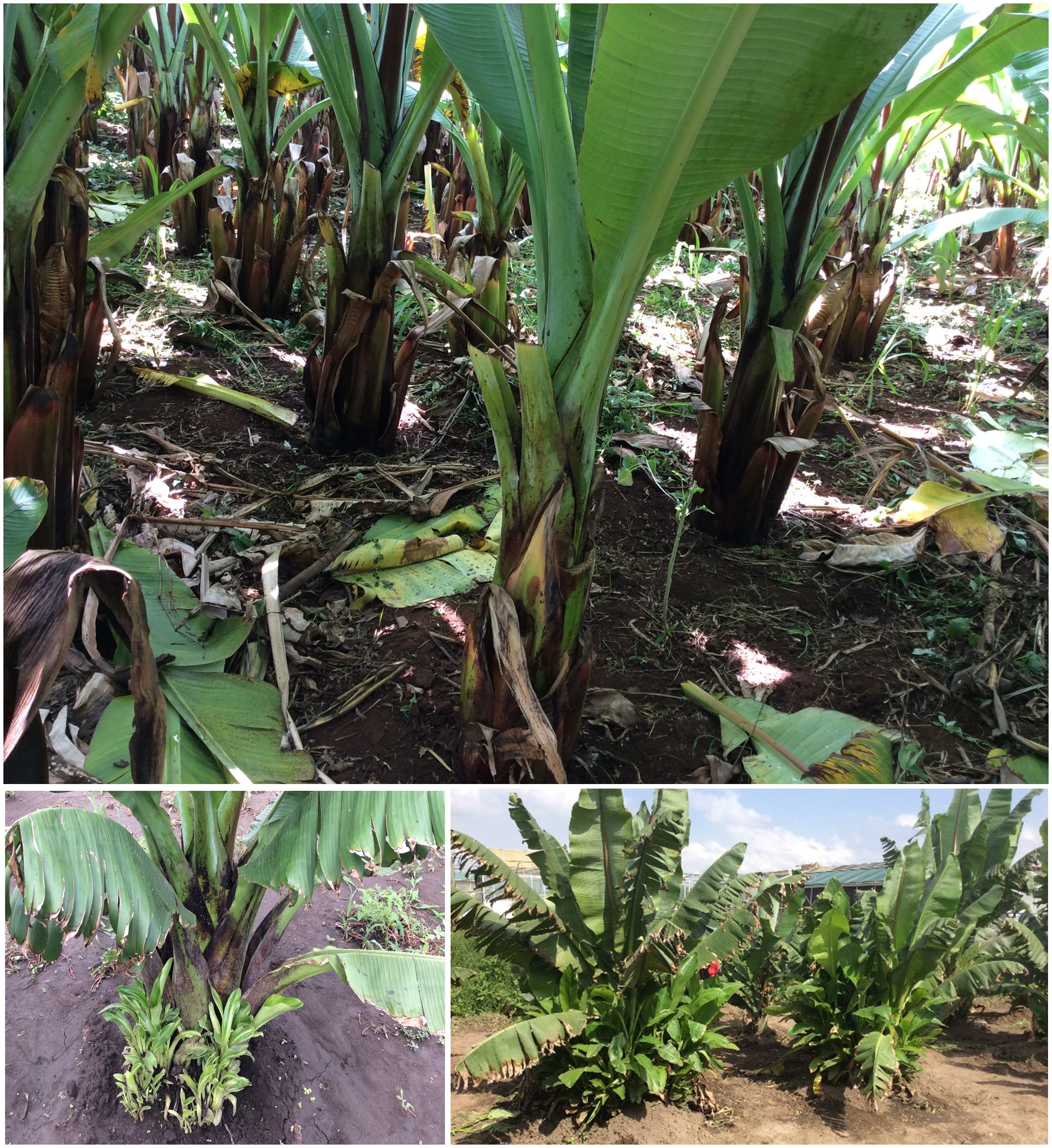
Entada Landrace - Sidama Region
The unique Entada landrace produces spontaneous suckers for natural propagation. Genetic studies show high heterozygosity (0.79) in Sidama Entada genotypes [citation:10].

Enset Landrace Diversity
Green and purple-leafed landraces in Sidama. Farmers select different varieties for food quality, disease tolerance, and medicinal properties. A total of 296 landraces documented across Ethiopia [citation:7].
🏞️ Ari (South Omo)
The Ari zone in South Omo is a relatively under-researched enset-growing area with unique practices and close proximity to wild enset populations [citation:6][citation:10].
🌱 Traditional Practices
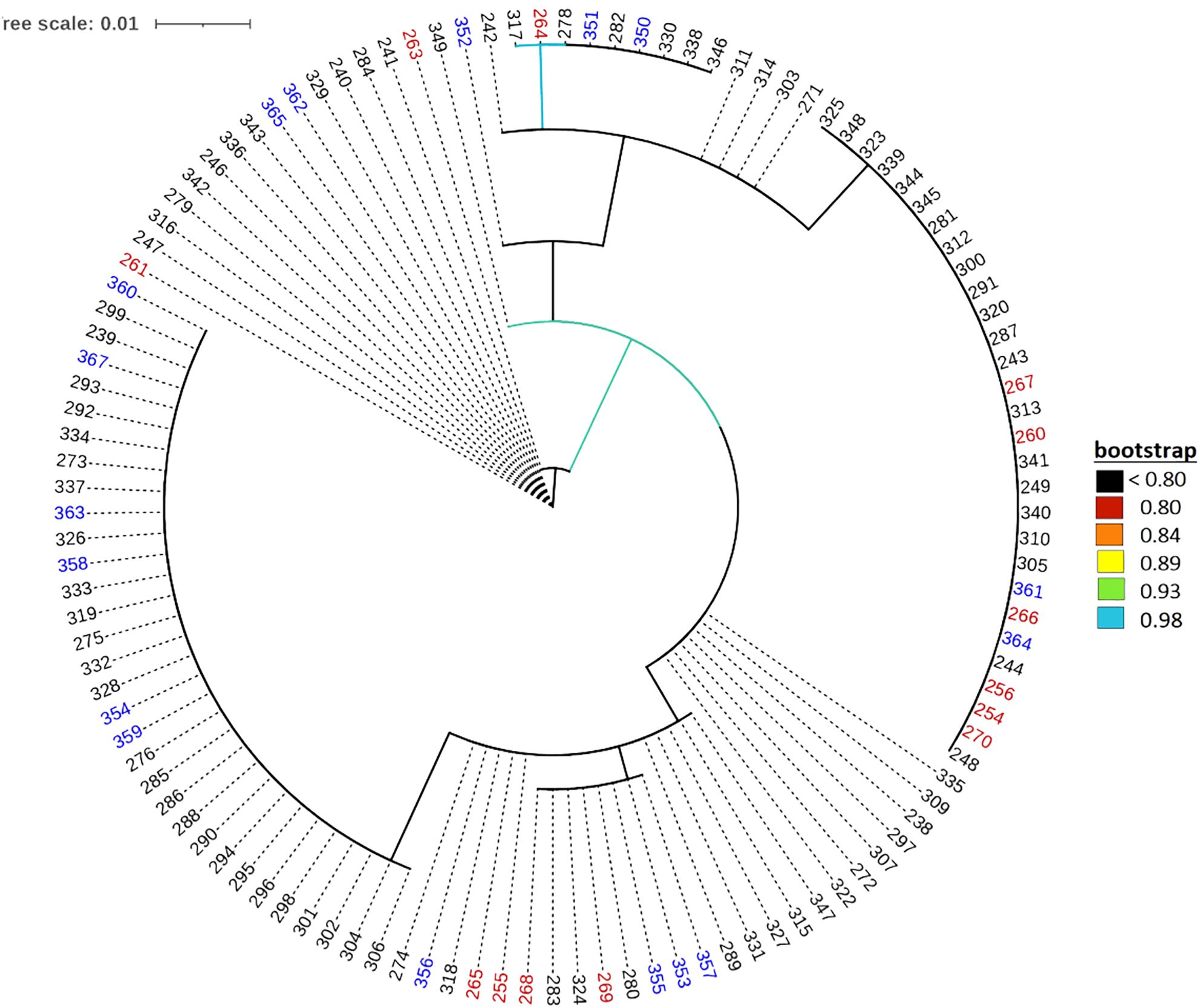
Entada Landrace - South Ari
Entada genotypes in South Ari show unique clonal propagation through spontaneous suckers. Genetic studies reveal limited diversity, suggesting ancient farmer selection [citation:10].
🌿 Wild Enset Populations
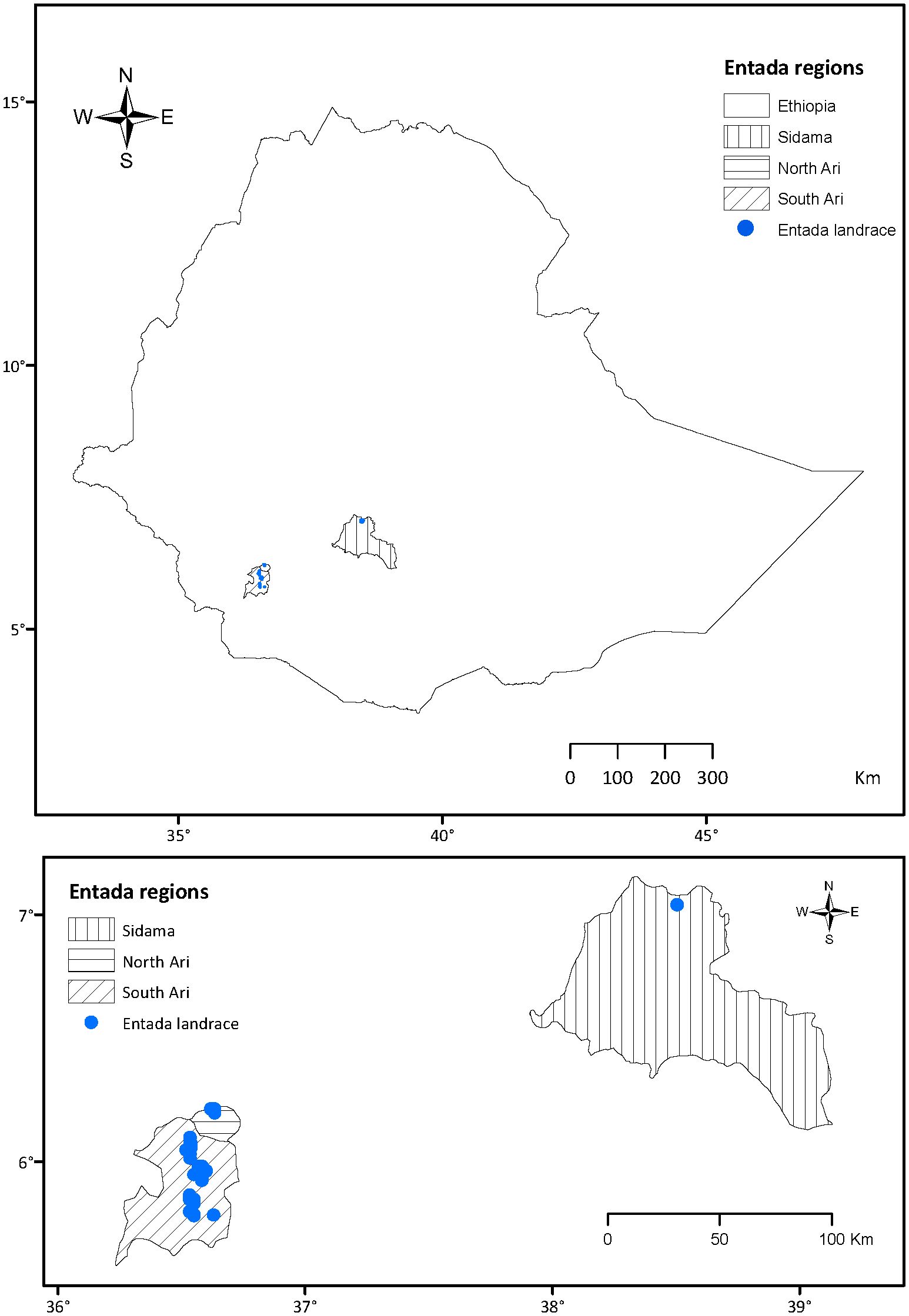
Wild Enset Near Cultivated Areas - Ari
The Ari zone hosts wild enset populations (red points) in close proximity to cultivated enset, providing genetic resources for future breeding [citation:6][citation:10].
⚠️ Disease Management
Bacterial wilt (Xanthomonas wilt) is the most severe threat to enset production, affecting 70% of farms. Proper management is critical for food security [citation:7].
Enset with Xanthomonas Wilt
Bacterial wilt causes permanent wilting and plant death. Management includes rogueing infected plants, tool sterilization, and using disease-free seedlings [citation:2][citation:7].
💡 Recommendations for Expanding the Gallery
📷 1. Conduct Field Photography
- Partner with researchers: Contact universities like Arba Minch, Hawassa, or Alliance Bioversity for access to high-resolution images
- Document seasonal practices: Planting (rainy season), harvesting (dry season), processing events
- Capture rituals: Weddings, funerals, and planting ceremonies where enset plays a central role
🗺️ 2. Create Interactive Maps
- Region boundaries: Overlay enset cultivation zones based on Borrell et al. [citation:6]
- Landrace hotspots: Mark areas with highest diversity (Wolaita, Gurage, Sidama)
- Wild enset locations: Show proximity to cultivated areas in Ari and Sheka
🌿 3. Landrace Identification Guide
- Photo catalog: Create a searchable database of 50+ common landraces with farmer names
- Key traits: Leaf color (62% of identification), plant size, pseudostem characteristics [citation:7]
- Uses: Food quality, fiber strength, medicinal properties for each landrace
🎥 4. Video Documentation
- Processing techniques: Time-lapse of fermentation (6-12 months)
- Traditional tools: Demonstrations of scrapers, squeezers, and fermenting pits
- Oral histories: Interviews with elders on changing practices
🏛️ 5. Institutional Collaborations
- Smithsonian Institution: Access the Michael Doochin Collection [citation:3]
- Alliance Bioversity: High-quality images from Guy Blomme's fieldwork [citation:7]
- FAO Ecocrop: Basic botanical illustrations and distribution data [citation:1]
📱 6. Community Contribution Platform
- Farmer-submitted photos: Create a submission form with proper attribution
- Local names: Document landrace names in local languages (Wolaita, Gurage, Gamo)
- Seasonal calendars: Visual guide to enset management throughout the year
🗺️ Major Enset Growing Regions of Ethiopia
Based on Borrell et al. 2019, the main enset cultivation zones include: Gamo, Wolaita, Gurage, Sidama, Ari, Hadiya, Kembata, and Silte [citation:6].
[Interactive Map Placeholder - Recommend embedding Google Maps with cultivation zone overlays]
Source: Borrell et al., NIH [citation:6]